
The Night Shift: Why Moths Are Just as Important as Bees (and How Your Native Garden Helps Them)
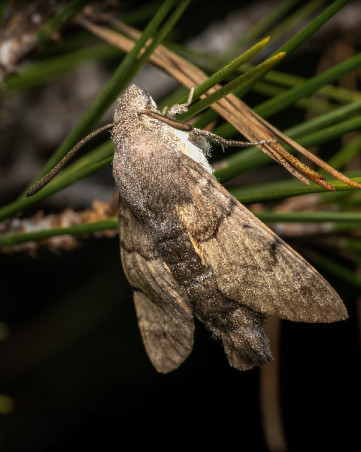 When we talk about pollinators, bees and butterflies usually steal the spotlight. But there’s a whole other world of unsung heroes taking over the garden after the sun goes down. With over 1,850 species of moths native to Illinois—compared to just 150 species of butterflies—the night shift is quietly keeping our local ecosystems thriving.
The Unsung Heroes of Pollination
While bees are busy during the day, moths are built for the night. They are heavily drawn to pale or white flowers that stand out in the moonlight, especially those that release strong, sweet fragrances in the evening. Because many moths have longer tongues (proboscises) than bees, they are perfectly adapted to pollinate deep, tubular flowers that other insects simply can't reach.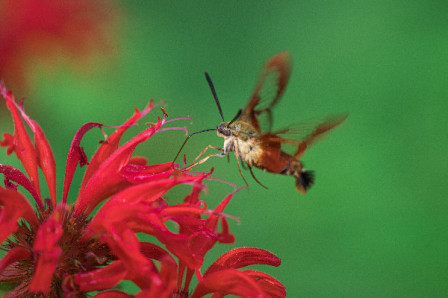 Fun Fact: Not all moths work the night shift! The Hummingbird Clearwing moth is active during the day. As its name suggests, it hovers just like a hummingbird while drinking nectar from native plants.
The Backbone of the Food Web
Moths do more than just pollinate. In an ecological landscape, they are the absolute foundation of the food web.Renowned entomologist Doug Tallamy found that a single pair of chickadees needs to catch between 6,000 and 9,000 caterpillars just to raise one clutch of babies. The vast majority of those caterpillars come from moths. Without moth caterpillars, our local songbird populations would likely crash.
How to Support Moths in Your Native Garden
To truly support moths, a garden needs two things: nectar sources for the adults, and host plants for the caterpillars to eat. Here are some of the best Midwest native plants to include: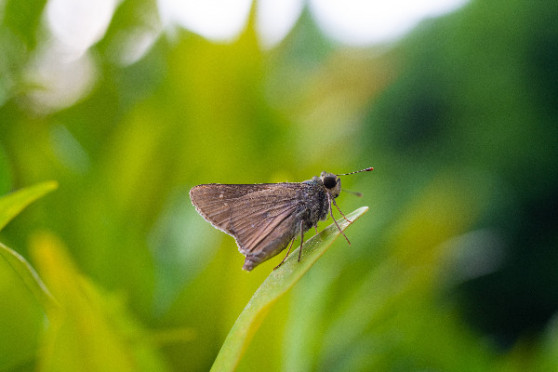
- The Oaks (Quercus spp.): The absolute heavyweights of the ecosystem. Native oaks, like the White Oak, host over 200 species of caterpillars in the Midwest.
- Spicebush (Lindera benzoin): Beyond supporting the Spicebush Swallowtail butterfly, it's also a host plant for the magnificent Promethea silk moth.
- Foxglove Beardtongue (Penstemon digitalis): The white, tubular flowers are perfectly shaped for hovering moths to spot and access in low light.
- Mountain Mint (Pycnanthemum spp.): Provides excellent late-season nectar with clusters of white flowers that serve as easy landing pads in the dark.
- Missouri Evening Primrose (Oenothera macrocarpa): Its large, pale-yellow flowers open in the evening, making it a perfect nocturnal landing pad.
A Chemical-Free Reminder
Even the best native plants won't help if the habitat isn't safe. To protect these crucial pollinators, avoid synthetic pesticides and neonicotinoids, which are highly toxic to all Lepidoptera. Additionally, practice "leaving the leaves" in the fall! Many moth species overwinter in the leaf litter as pupae; if we bag up the leaves, we are throwing away next year's pollinators.Let's give the night shift the credit—and the habitat—they deserve.
_____________________________________________________________________________________________________________
Eco(Fun) Fact: The Bird That Waits for the Flowers to Die
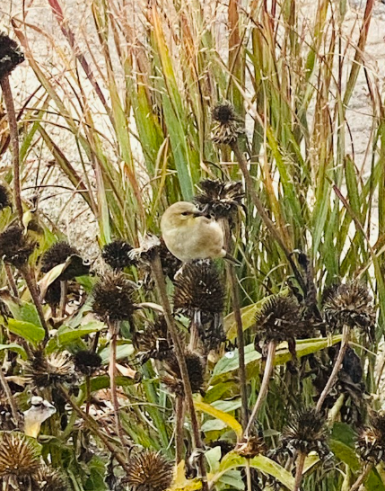 Most of our local birds nest and raise their young in the spring, feeding them a steady diet of caterpillars. But the American Goldfinch does things differently—they wait until late July, August, or even September to nest. Why? Because they are strict vegetarians!
 Goldfinches time their breeding to perfectly coincide with the late-summer seed crops of native plants like Purple Coneflower, native thistles, and cup plants. They use the fluffy down from the native thistles to line their nests, and they feed the fresh, nutrient-dense seeds directly to their babies. This is why we always recommend leaving your spent flower heads standing in the garden through the fall and winter!
<---- Photo of Goldfinch feeding from dead Purple Coneflower heads in Lincoln Park, Chicago.
 Aug 31, 2026 by
 - share:


